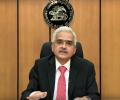
The RBI on Friday said it will give banks Rs 1 trillion through targeted long-term repo operations (TLTROs), of up to three-year maturity, to deploy in "investment-grade corporate bonds, commercial paper, and non-convertible debentures over and above the outstanding level of their investments in these bonds as of March 27, 2020."

The total wealth of top 100 real estate barons accounted for Rs 2.37 trillion ($32.7 billion) in 2018, up 27 per cent against 2017's cumulative wealth of Rs 1.87 trillion ($28.6 billion).

Some of the firms that have witnessed major drop in analysts' coverage include Dish TV, YES Bank, and JSW Energy.

In the first eight months of 2019, 70 per cent stocks in the BSE 500 universe were down. These stocks account for 94 per cent of India's total market capitalisation.

With auditing under the scanner and two of the Big Four firms stopping non-audit services for audit clients, auditors will now be subjected to a more stringent standard of reporting.

Fintech players are customising solutions for rural markets and helping SMEs learn how to use the services

13 eminent economists, including former RBI governor Raghuram Rajan and current International Monetary Fund Chief Economist Gita Gopinath, in a report have asked the political establishment not to resort to populist tricks.

New norms are in place to strengthen regulations for this set of lenders which has been playing a critical role in Asia's third largest economy, notes Tamal Bandyopadhyay.
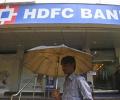
In a mixed bag for HDFC Bank ahead of the parent HDFC's merger with itself, the Reserve Bank of India has declined to make exceptions on certain aspects, and has offered some leeway on others. The country's largest private sector lender, which is aiming to conclude the merger with the home finance major by July, had written to the central bank seeking certain forbearances after announcing the $40-billion merger in April last year. In an exchange filing this evening, HDFC Bank said it received a response from RBI on Thursday and also said that there are a few pending issues.

The government is set to ask PSBs to expeditiously introduce repo-rate linked products "to step up affordable credit".

Kochhar brothers stepped down from the board of Credential Finance by 2009. While Deepak Kochhar started NuPower Renewables, Rajiv set up Avista Advisory Group

If you are running a sweetmeat shop, will you manage a dairy for milk supply or buy milk from the market? Banks are running a dairy (which has its cost for processing milk), while NBFCs are buying milk from the market, observes Tamal Bandyopadhyay.

'People who have unaccounted money often park it in unregulated deposit schemes.' 'Curbing illegal deposit-raising activity will also carry forward the government's drive against black money.'

The finance minister asked lenders to identify eligible borrowers and reach out to them and urged for quick implementation of a sustained resolution plan for the revival of every viable business.

'No one seems to have looked at the extent of money that is being borrowed by individuals, and the rising levels of household debt.' 'At their present rates of growth, personal loans in India could well become the largest category of bank credit in just two or three years,' cautions T N Ninan.

Some of the top indebted companies likely to face financial headwinds in the coming quarters include NTPC, PowerGrid, Tata Steel, Adani Power, JSW Steel, UPL, and Steel Authority of India. Together these 201 companies owed Rs 14.9 trillion to their lenders at the end of September 30, 2019, up 4.1 per cent year-on-year (YoY) during the first half of FY20.

Short-term loans from NBFCs can be more convenient but come at higher cost

Stick to export-focussed plays, large-caps, say analysts

Mannapuram Finance, Mahindra and Bharti Axa are some of the firms known to have bought office spaces worth more than Rs 100 crore

The mutual fund (MF) industry has seen a fair number of new entrants in the last 10 years but none of them have proved to be much of a challenge for the larger players. The list of top 20 fund houses, which manage over 90 per cent of the industry's total assets, continues to be dominated by players who have been in the business for more than a decade. Bajaj Finserv MF may change that, say experts.
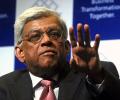
HDFC chairman Deepak Parekh on Monday said harmonisation of rules between banks and non-banks which reduces the regulatory arbitrage was one of the key factors which influenced the decision for merger between the largest home financier and HDFC Bank. Parekh, who said the merger discussions have happened over the last three weeks, noted that requirements like non performing asset recognition being at par and size-based regulations for non-bank finance companies are among the changes in landscape. Addressing a press conference after the surprise announcement earlier in the day, Parekh said the last three years have seen harmonisation in the regulations which reduce the "regulatory arbitrage" of running a separate home finance company.

ICICI Prudential has tied up with the healthcare service provider to enable investors in its ICICI Prudential Savings Fund use the money seamlessly for medical purpose.

Long-term capital gains tax may be scrapped and the burden of dividend distribution tax could perhaps be shifted from companies to shareholders. Also, the Budget could provide income tax relief for the salaried classes, while proposing tax sops for small, medium and micro enterprises.

Gold loan is currently the fastest-growing loan category (among the various types disbursed to individuals). On February 26, 2021, the outstanding loan against gold jewellery stood at Rs 56,596 crore. By February 25, 2022, it had risen to Rs 71,408 crore, a year-on-year growth of 26.2 per cent, according to the Reserve Bank of India's (RBI's) data. Several factors are driving the demand for gold loans.

Twenty-three of the 31 stocks in his publicly disclosed portfolio consist small-cap stocks. jhunjhunwala's portfolio rose 15.2% in Q3.

Prime Minister Narendra Modi will on Friday launch two schemes of the Reserve Bank of India (RBI) that may go a long way in changing how the household sector invests, and complains if anything goes wrong with their savings. These schemes - retail direct and an integrated ombudsman - will be launched by the Prime Minister virtually, in the presence of Finance Minister Nirmala Sitharaman. With the introduction of retail direct, a common man can directly take a position in government securities (G-Sec), considered to be the safest asset class a sovereign can offer.

Fintech companies believe that the impact of Reserve Bank of India's order last week on unsecured loans will be visible in six to 12 months and prompt them to diversify and strengthen their secured portfolio. Fintechs which source funds through banks or non-banking finance companies (NBFCs) are looking at quickly building their secured portfolio options to at least 40 per cent of their total portfolio. "Over the medium to long term, as part of our product strategy, we are evaluating secured products which can be enabled over a digital platform" said Yogi Sadana, the founder of Zype, a lending-focussed fintech.

Isn't it time to review the 'fit and proper' criteria for banking licence, particularly with reference to individuals applying for it, asks Tamal Bandyopadhyay?

In October, the contribution through SIPs rose to Rs 79.85 billion, up 42% compared to the same month last year.

Twenty years after India's insurance sector was opened up, unshackling the control of state-owned companies, as many as 50 private players have set up shop. Along with their foreign partners, private players have brought about a sea change in the product offering, distribution and underwriting processes, and services levels. Yet, India's insurance penetration needle has not moved much.

Of the 2,562 customer complaints received between January 2020 and March 2021, a majority relate to illegal apps. At least two dozen suicide cases have been reported, perpetrated by the harassment by loan app operators, points out Tamal Bandyopadhyay.

Sitharaman said economic slowdown seems to have bottomed out and the coming festive season will help the economy start looking up.

Pawan Ruia has finally done it, a beaming Buddhadeb Bhattacharjee, then West Bengal chief minister, had said at the reopening of the 70-year-old Sahagunj factory owned by Dunlop in 2005. But with the Calcutta high court passing a winding-up order in 2013 and the Trinamool Congress-led state government passing a Bill to take over the company in 2016, the once-upon-a-time undisputed leader in the Indian tyre industry looks vastly undone. But that can hardly be a deterrent for Ruia, who has a penchant for making headlines one way or the other.

Banks are set to sell dud-loans worth Rs 90,000 crore of 22 firms in the first tranche to the National Asset Reconstruction Company (NARCL). It's reason for cheer given that such sales to asset reconstruction companies (ARCs) have been poor in recent times. In fiscal 2020, their assets under management (AUM) contracted by 4 per cent; and in fiscal 2021, it fell by another 100 basis points to Rs 1.07 trillion. So, why are we where we are?

The Reserve Bank of India's latest order prohibiting Bajaj Finance from sanctioning and disbursing loans under its 'eCOM' and 'Insta EMI Card' products may not have serious implications on the non-banking finance company's profitability, provided the ban is lifted within six to eight weeks, analysts said. "In a surprise move, the RBI has asked Bajaj Finance to stop sanction and disbursal under two of its digital lending products. "While the move is negative, the speed of correction will be key to reinstate products," global brokerage Jefferies said in a report.

A well-run non-banking company has better margins than a bank, but the objective of setting up Ujjivan was to provide comprehensive financial inclusion, Ujjivan Small Finance Bank MD & CEO Samit Ghosh tells Anup Roy in an interview.

Physical KYC takes anywhere between two to five working days to get done, V-KYC, only a few minutes.

Companies are legally allowed to invest in markets in India, but the practice has seldom stirred central bank concern until recently, when they have become much more active players.

Bonuses are typically commensurate with deal activity in any given year. Investment banks, on average, pocket 2-3 per cent as fees for managing an IPO and 1.5-2 per cent for handling QIPs.
An initial reading of the guidelines indicates two factors - potential rise in borrowing cost and lower returns on investment book - could hit the spread of NBFCs.
